
Skip to product information
1 of 6

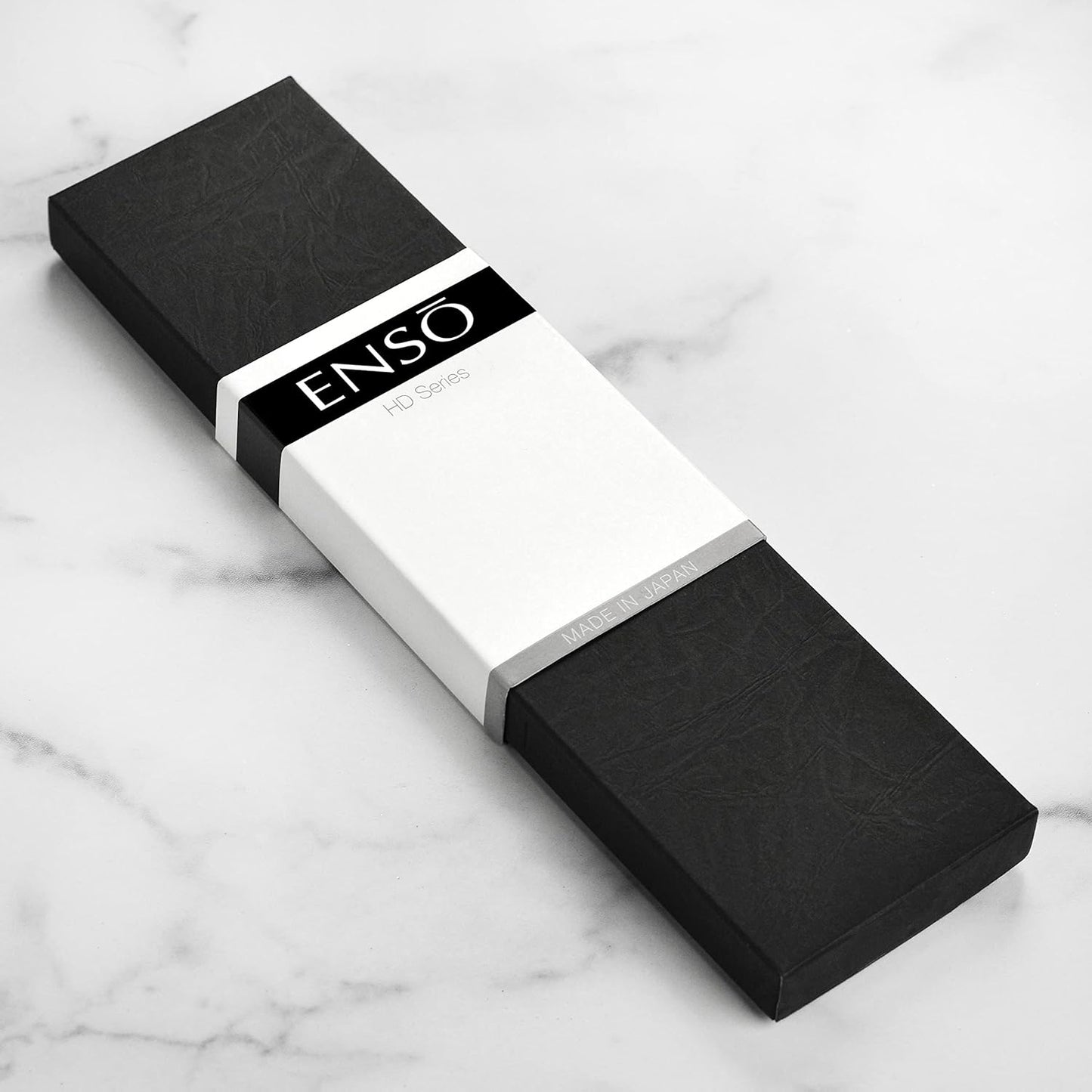
Enso HD Nakiri Knife (VG10 Hammered Damascus)

Enso HD Nakiri Knife (VG10 Hammered Damascus)

A Japanese Vegetable Knife Built for Clean, Straight Cuts

The nakiri is the Japanese vegetable specialist, a flat, straight-edged blade designed to chop and slice produce in clean, full downward strokes that reach the board along the whole edge, with no rocking required.

The Enso HD version is a beautiful example of the type, handcrafted in Seki City, Japan, a region famous for blade-making since its sword-smithing days. If you do a lot of vegetable prep, a nakiri makes it faster and more precise than a standard chef's knife, and it is a joy to use.

The materials are premium and, importantly, inert.

The blade is 37 layers of stainless Damascus around a VG10 stainless cutting core, a high-end Japanese steel hardened to around 61 on the Rockwell scale and ground to a fine roughly 12-degree double-bevel edge, so it takes and holds a very sharp edge. As stainless, it is food-safe and sheds nothing into your food. The full-tang handle is black canvas micarta, which is a composite of canvas layers bonded in resin, chosen because it gives a wood-like feel with far more resistance to moisture and cracking, and it carries a lifetime warranty.

True Shift Score: 8.6 / 10

This is our own assessment, not a lab result or a certification.

It scores high for an inert, food-safe premium blade, genuinely excellent edge performance, full-tang construction, made-in-Japan craftsmanship, and a lifetime warranty, all of which make it a buy-it-for-life tool rather than a disposable one. It sits just below an all-natural-handled knife on our scale for one honest reason, the micarta handle is a composite rather than solid wood, which is a fine and durable choice but not the most natural material. The harder steel's care needs round out the small gap.

The Honest Tradeoffs

A couple of honest points.

1. First, the handle is micarta, not natural wood. It is an excellent, stable, food-safe material that outlasts wood in a wet kitchen, but if you specifically want an all-natural wooden handle, this is a composite, and a knife like the Dexter-Russell with its hardwood handle is the more natural-material choice.

2. Second, the very hardness that lets VG10 hold such a keen edge also makes it a little less forgiving than softer steel, so it can chip if used on bone, frozen food, or twisted in a cut, and it rewards careful sharpening. 

3. And like any fine Japanese knife, it should be hand washed and dried, never put in the dishwasher. 

4. It is a precision instrument, treated as one it will serve for decades.

How We Evaluate Cooking Tools

We look at four things, and none of them is a lab score:

1. Whether the material is inert and won't shed or leach into your food

2. How it holds up to heat and daily use

3. The quality of the construction including the handle

4. And how long it is built to last

For cooking tools, the real shift is away from plastic that softens and sheds, toward materials that simply don't.

View full details

When Something Else Is the Better Fit

Related Reading and Collections

For why plastic utensils are worth replacing and how the materials compare, read our guide to non-toxic cooking tools, and for the wider picture on PFAS and microplastics across the kitchen, see our non-toxic kitchen guide. To weigh other options, browse the full Microplastic-Free Cooking Tools collection, or step back to the Microplastic-Free Kitchen hub for cookware, cutting boards, and food storage. If you would like to work through your whole home step by step, our DIY Healthy Home Guidebooks are a practical place to start.

Frequently Asked Questions

What is a nakiri used for?

It is a Japanese vegetable knife with a flat, straight edge, ideal for chopping and slicing produce in clean downward strokes without rocking. It excels at vegetables for stir-fries, salads, and everyday prep, and is not meant for bones or meat with bones.

Is the micarta handle safe and durable?

Yes. Micarta is canvas bonded in resin, a stable, food-safe, moisture-resistant material that resists the cracking and warping wood can suffer in a wet kitchen. It is a composite rather than a natural material, which is the only reason to prefer wood if all-natural is your priority.

How do I care for a VG10 Damascus knife?

Hand wash and dry it immediately, never the dishwasher. Keep it off bones and frozen food, since the hard, keen edge can chip, and sharpen it carefully or have it professionally sharpened. Treated well, it holds its edge a long time.

About This Product

This knife is fulfilled through Amazon, which handles pricing, availability, and shipping. The True Shift earns a commission on qualifying purchases, and that is what keeps this work independent and reader-supported rather than funded by the brands being reviewed.