
Skip to product information
1 of 13

Kitchentoolz 1 Gallon Glass Mason Jar with Glass Lid

Kitchentoolz 1 Gallon Glass Mason Jar with Glass Lid

The Big Jar That Seals With Glass, Not Plastic

This is the version of the extra-large mason jar we would point most people to first.

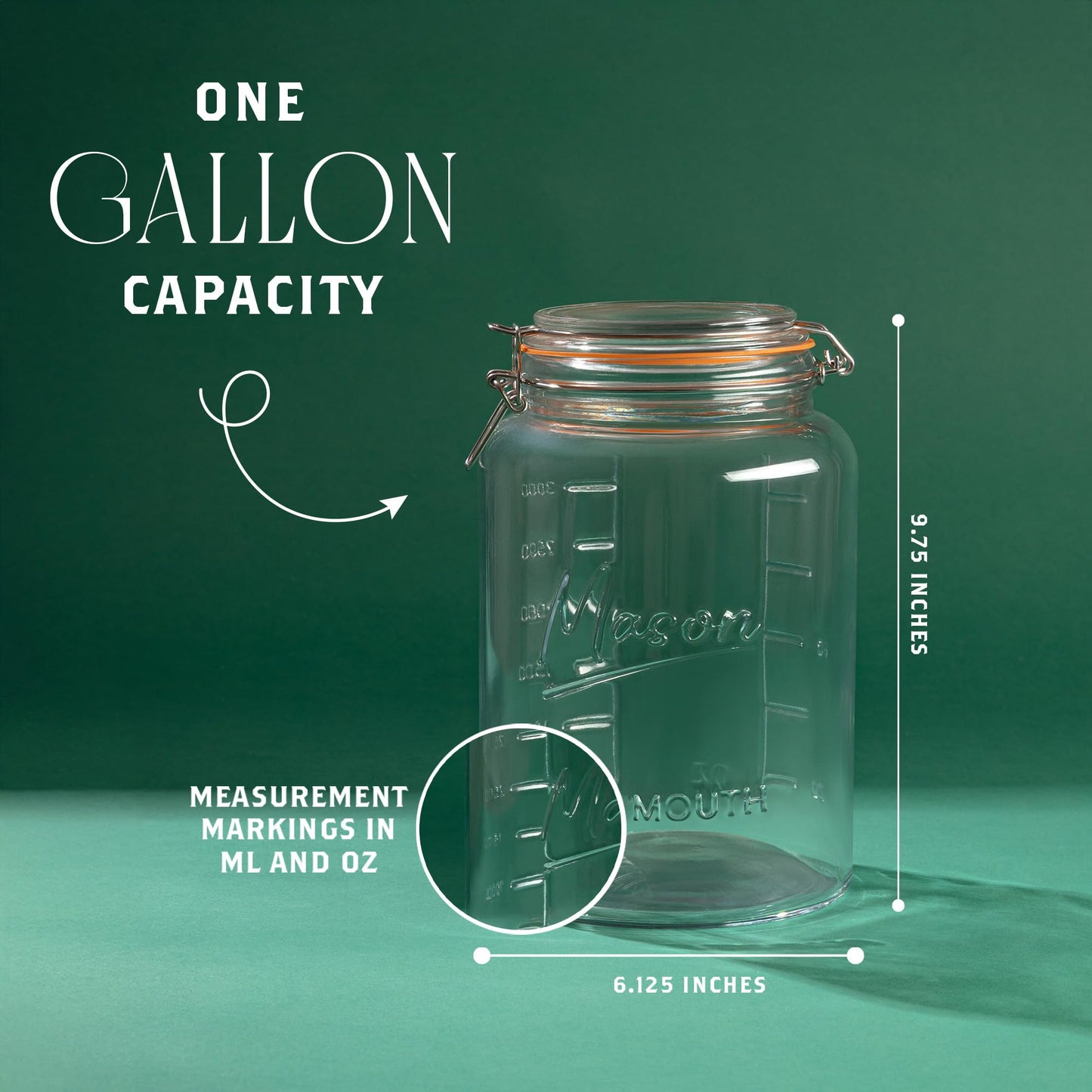
The Kitchentoolz 1-gallon jar holds a full 128 ounces of glass, and instead of a metal lid with a plastic liner, it closes with a hinged glass lid sealed by a rubber gasket and a metal clasp, the classic swing-clasp design. That matters for a microplastic-free kitchen: the jar is glass, the lid is glass, and the only thing between them is a natural rubber gasket, so nothing plastic touches your food. For a jar this big, that is the most plastic-free way to get an airtight seal.

It is made in the USA from thick food-grade glass, with a super-wide mouth that fits a whole hand or a measuring cup, and embossed measurement markings down the side so you can track what is left at a glance. The size and seal make it a genuine workhorse: brewing kombucha and kefir, fermenting big batches of pickles or kraut, holding a sourdough starter with room to triple, or storing bulk flour, rice, beans, and pasta. The clamp seal and clear glass also make it handsome enough to leave out on the counter.

True Shift Score: 8.6 / 10

This is our own assessment, not a lab result or a certification.

It scores at the top of our big-jar range because it pairs inert, made-in-USA glass with a glass lid and a natural rubber gasket, a fully plastic-free, airtight seal in a genuinely huge 1-gallon size, with handy measurement markings. It sits just shy of a perfect score only for the practical reasons that come with any big sealing jar: the rubber gasket is a consumable that needs hand washing and occasional replacement, and a full gallon of glass is heavy and breakable. For large-batch fermenting and bulk storage with no plastic at the seal, it is an excellent choice.

The Honest Tradeoffs

1. The rubber gasket is the one consumable, and it is what keeps the seal plastic-free rather than relying on a plastic liner. 

2. Like any gasket it softens over time and is eventually replaced, and it is best hand washed even though the glass jar and lid are dishwasher safe. 

3. Beyond that, a full gallon of glass is genuinely heavy and breakable, so it wants a stable, low spot rather than a high shelf. 

4. And while it is rated for storage, fermenting, and pickling, a jar this large is not meant for heat-processed canning, the same heat-penetration limit that applies to any oversized jar. 

5. None of this is a flaw, it is simply how a big glass-and-gasket jar works, and it is the trade for a genuinely plastic-free seal.

How We Evaluate Food Storage

We look at four things, and none is a lab score:

1. Whether the food-contact surface is inert and won't leach

2. Stain, or hold odors, what the lid is actually made of, since that is where plastic hides in most "glass" storage

3. How well it seals and holds up across the fridge, freezer, microwave, and dishwasher, 

4. And how durable it is over years of use. 

The real shift in food storage is getting your food off plastic and onto glass.

View full details

When Something Else Is the Better Fit

  • If you love the size but want a warm, natural look, the same jar comes with a natural acacia wood lid and silicone gasket, which is also fully plastic-free.
  • If you want the lowest price and do not mind a plastic sealing liner, the metal-lid version is the budget option, though its airtight seal comes from a plastisol liner.
  • This glass-lid jar is the pick when you want the most plastic-free seal in the biggest size.

Browse more in the Microplastic-Free Food Storage collection.

Related Reading and Collections

For keeping fruits and vegetables fresh without plastic, see our produce storage guide, and for the wider picture on PFAS and microplastics across the kitchen, read our non-toxic kitchen guide. To weigh other options, browse the Microplastic-Free Food Storage collection, or step back to the Microplastic-Free Kitchen hub for cookware, cutting boards, and cooking tools. If you would like to work through your whole home step by step, our DIY Healthy Home Guidebooks are a practical place to start.

Common Questions About the Kitchentoolz Glass-Lid Mason Jar

Is the Kitchentoolz 1 gallon glass-lid jar plastic-free?

Yes, at the food-contact surfaces. The jar and the hinged lid are both glass, and the seal is a natural rubber gasket held by a metal clasp, so no plastic touches your food. That makes it the most plastic-free way to seal a jar this size, unlike a metal lid with a plastic liner.

Can I ferment kombucha or pickles in the Kitchentoolz glass-lid jar?

Yes. The 1-gallon capacity, airtight glass-and-gasket seal, and super-wide mouth make it well suited to fermenting kombucha, kefir, pickles, and kraut, as well as sourdough starters and bulk dry-goods storage. It is meant for storage and fermenting rather than heat-processed canning.

How do I care for the Kitchentoolz glass lid and gasket?

The glass jar and lid are dishwasher safe, while the rubber gasket is best hand washed to preserve the seal, and it can be replaced over time as the rubber softens. Avoid sudden extreme temperature changes with the glass.

About This Product

This jar is fulfilled through Amazon, which handles pricing, availability, and shipping. The True Shift earns a commission on qualifying purchases, and that is what keeps this work independent and reader-supported rather than funded by the brands being reviewed.