
Skip to product information
1 of 19

Non-Toxic Food-Grade Silicone Cutting Board & Trivet – Lagomian

Non-Toxic Food-Grade Silicone Cutting Board & Trivet – Lagomian

A Flexible Silicone Board That Pulls Double Duty as a Trivet

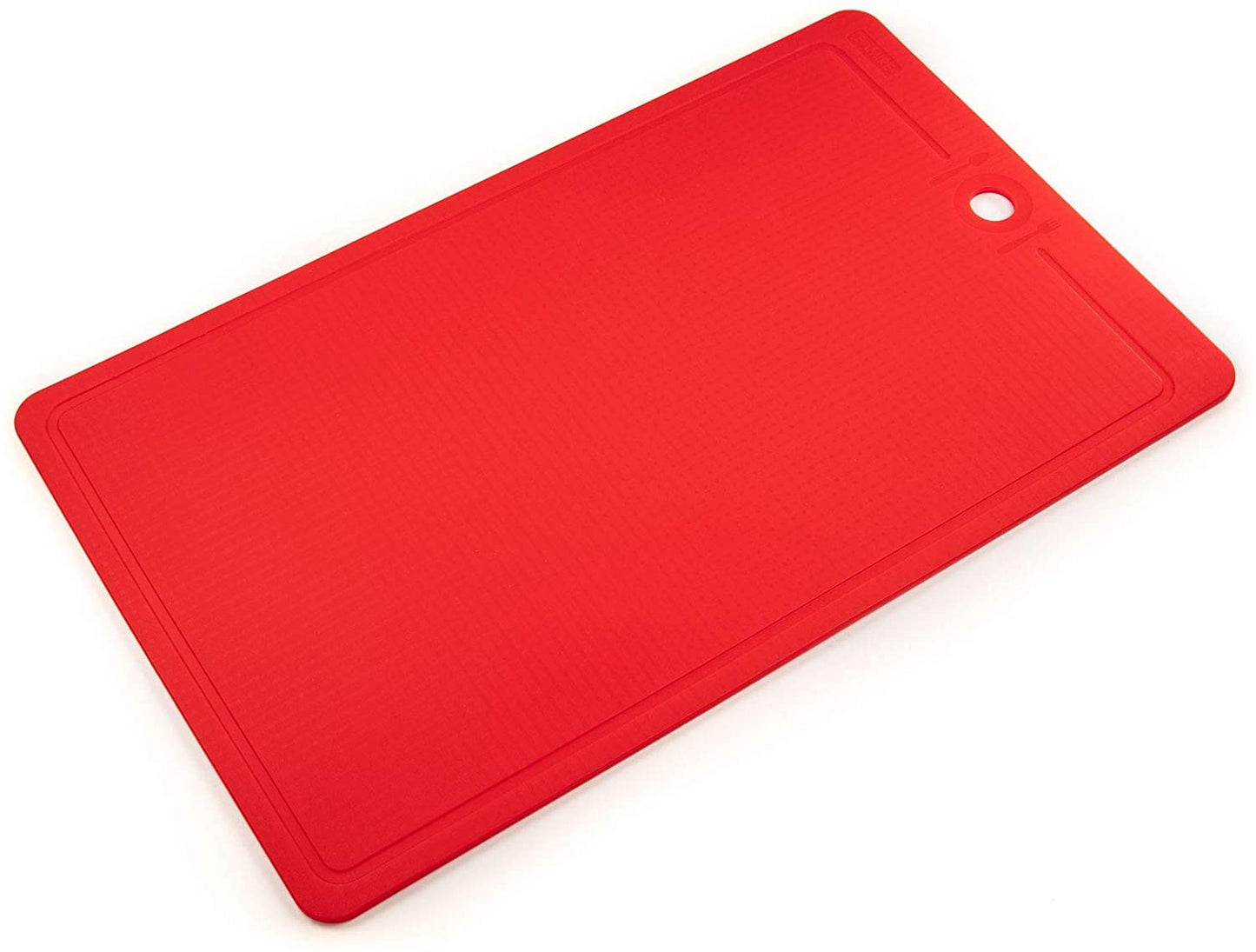
The Lagomian is a flexible, food-grade silicone board made in South Korea, about 12.2 by 9.3 inches and 5 millimeters thick, with a built-in juice groove and a non-slip surface on both sides that grips smooth counters to stay put while you work. It is reversible, so you can keep raw and ready foods on separate faces, and it flexes enough to curl up and pour chopped ingredients straight into the pan. Where it stands out from a basic silicone mat is its temperature range: rated from well below freezing up to about 482°F, it doubles as a trivet for hot cookware, goes in the microwave, and can be sanitized in boiling water or the dishwasher.

For a non-toxic kitchen, silicone earns its place. Food-grade silicone is stable and inert, so it does not shed microplastics the way a hard plastic board can, and it is BPA-free and nonporous, which means it resists odors and stains and is more sanitary than wood in the sense that it absorbs nothing and wipes or washes fully clean. Because the surface is soft, it is gentle on knife edges, the opposite of what glass, granite, or steel do to your blades.

True Shift Score: 7.2 / 10

This is our own assessment, not a lab result or a certification.

Silicone sits in the middle of the category, which is the honest placement: it is gentle on knives, sheds no microplastics, is nonporous and easy to fully sanitize, and the heat resistance that lets it double as a trivet is a real bonus. It lands below wood, bamboo, and rubber because it is less durable and substantial, it takes cut marks over time, and it is a synthetic rather than a natural surface. As a flexible, hygienic, knife-friendly board with extra versatility, it is a sound everyday choice.

The Honest Tradeoffs

1. The honest tradeoff with any silicone board is that a soft, knife-friendly surface is also a surface that takes cut marks. 

2. Lagomian markets the material as knife-mark resistant, and the thick 5mm build does hold up better than a thin mat, but no board is truly mark-proof, and over time you will see wear. 

3. It is also flexible rather than a firm, weighty block, which is great for funneling food but less steady underhand than wood for heavy chopping. 

4. And while food-grade silicone is a stable, inert synthetic, it is still synthetic, so for an all-natural surface, wood remains the more natural choice. 

5. Think of it as a versatile, hygienic, knife-kind everyday board rather than a lifetime heirloom.

How We Evaluate Cutting Boards

We look at four things, and none of them is a lab score:

1. Whether the material sheds microplastics

2. How kind it is to your knives

3. Whether any glue or finish is food-safe

4. And how well it lasts with normal care

Cutting boards are a microplastics-and-glue question, not a PFAS one, despite what some guides imply.

View full details

When Something Else Is the Better Fit

If you want a firm, heavy, long-lasting board with an heirloom feel, step up to wood like the WoodForChef walnut, or choose the knife-friendly and far more durable NoTrax rubber board. If you would rather have a silicone board that folds down small for storage and travel, the Cozymomdeco foldable board is the close alternative. Choose this one when you want the trivet, microwave, and sterilize-anywhere versatility.

Related Reading and Collections

For the full science on why plastic boards shed and how the materials compare, read our guide to microplastics in cutting boards, and for the wider picture on PFAS and microplastics across the kitchen, see our non-toxic kitchen guide. To weigh other options, browse the full Sustainable Cutting Boards collection, or step back to the Microplastic-Free Kitchen hub for cookware, cooking tools, and food storage. If you would like to work through your whole home step by step, our DIY Healthy Home Guidebooks are a practical place to start.

Frequently Asked Questions

Is silicone gentle on knives?

Yes. Silicone is soft, so it does not dull knife edges the way glass, stone, or steel do. The tradeoff is that the soft surface takes cut marks itself over time, which no cutting board fully avoids.

Can I really use it as a trivet?

Yes. It is rated to about 482°F, so it can sit under hot pots and pans, go in the microwave, and be sterilized in boiling water. That heat tolerance is part of what makes it more versatile than a plain cutting mat.

Is it more hygienic than a wood board?

In one sense, yes: silicone is nonporous, so it absorbs no liquids or bacteria and can be fully washed or sanitized, including in the dishwasher. Wood has its own natural antibacterial qualities, but silicone has the edge on being completely wipe-clean.

About This Product

This board is fulfilled through Amazon, which handles pricing, availability, and shipping. The True Shift earns a commission on qualifying purchases, and that is what keeps this work independent and reader-supported rather than funded by the brands being reviewed.