
Skip to product information
1 of 8

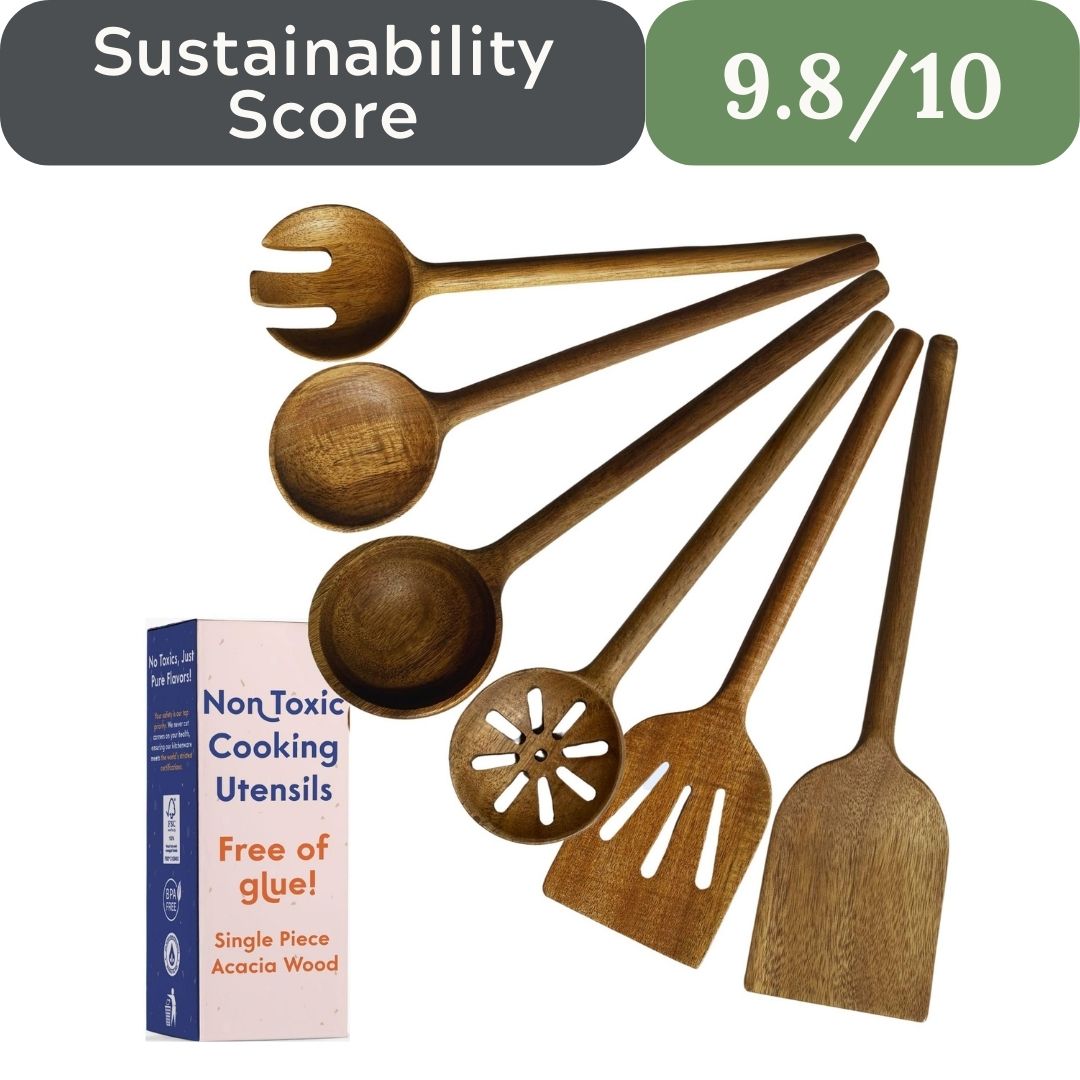
One-Piece Wooden Utensil Set (6-Piece, Glue-Free Acacia)

One-Piece Wooden Utensil Set (6-Piece, Glue-Free Acacia)

Carved From One Piece of Wood, the Way Utensils Used to Be

Here is something most people never realize about wooden kitchen tools: many "wood" and bamboo utensils are not solid at all.

They are laminated, built up from thin pieces glued together, and the adhesive holding them can contain formaldehyde or other resins, which is also why a glued utensil starts to split and delaminate after it gets soaked a few times. This Ziruma set, made by the same Miami brand behind the stainless mixing bowls, takes the honest route: each of the six tools is carved from a single solid block of acacia wood, with no glue and no joints anywhere. That means nothing to delaminate, no hidden adhesive, and no glue chemistry to worry about, the same single-piece logic that makes a solid wood cutting board better than a laminated one.

The wood is FSC-certified acacia, a genuine forestry certification for responsibly sourced hardwood, and the set is finished with a plant-based, food-safe finish rather than the petroleum-derived mineral oil most wooden utensils use.

As solid wood, it is naturally heat-stable, so unlike plastic or nylon it will not soften, melt, or shed into a hot pan, and the smooth surface is gentle on every cookware surface, including ceramic and nonstick coatings that metal would scratch. The six-piece set covers the everyday jobs: a ladle, a slotted spoon, a salad spoon and fork, a turner, and a slotted turner, with longer handles that keep your hand back from the heat.

True Shift Score: 8.7 / 10

This is our own assessment, not a lab result or a certification.

It scores near the top of our cooking tools for getting the materials genuinely right: each piece is one solid block of FSC-certified acacia with no glue, it carries a plant-based food-safe finish instead of petroleum-based oil, it is heat-stable and sheds nothing the way plastic does, and it is gentle on every pan including coated ones. The small gap from a perfect score is simply that wood, like any natural material, needs hand washing and occasional reconditioning, which is the ordinary upkeep of owning something built to last rather than a flaw.

The Honest Tradeoffs

1. Wood is wood, so it asks for a little care in return for lasting years: hand wash with mild soap, dry it rather than leaving it soaking, and recondition the surface occasionally to keep it from drying out, though the plant-based finish helps it resist moisture in the meantime. 

2. It is also a premium set rather than a bargain-bin bundle, which is what buys you the solid single-piece construction, the certified wood, and the natural finish instead of glue and petroleum oil. 

3. None of that is a real drawback so much as the normal trade for owning natural tools that last.

How We Evaluate Cooking Tools

We look at four things, and none of them is a lab score:

1. Whether the material is inert and won't shed or leach into your food

2. How it holds up to heat and daily use

3. The quality of the construction including the handle

4. And how long it is built to last

For cooking tools, the real shift is away from plastic that softens and sheds, toward materials that simply don't.

View full details

When Something Else Is the Better Fit

  • For the high-heat, scrub-hard jobs, or anything where you want metal, a stainless tool is the better reach, and metal is fine on uncoated stainless and cast iron pans where wood is not required.
  • But for everyday stirring, scooping, and serving, especially on coated cookware where metal would scratch, this is the tool to own, and it does the job plastic does without the melting or shedding.

Browse the full range in the Microplastic-Free Cooking Tools collection.

Related Reading and Collections

For why plastic utensils are worth replacing and how the materials compare, read our guide to non-toxic cooking tools, and for the wider picture on PFAS and microplastics across the kitchen, see our non-toxic kitchen guide. To weigh other options, browse the full Microplastic-Free Cooking Tools collection, or step back to the Microplastic-Free Kitchen hub for cookware, cutting boards, and food storage. If you would like to work through your whole home step by step, our DIY Healthy Home Guidebooks are a practical place to start.

Frequently Asked Questions

Why does one-piece construction matter?

Many wooden and bamboo utensils are laminated from smaller pieces with adhesives that can contain formaldehyde, and those glue lines are also where the tool eventually splits. Carving each utensil from a single block removes the adhesive entirely, so there is no hidden glue chemistry and nothing to delaminate.

Will these scratch my nonstick or ceramic pans?

No. The smooth wood surface is gentle on coatings, so it is safe on ceramic and nonstick cookware where a metal tool would scratch. That makes wood the right partner for coated pans.

How do I care for them?

Hand wash with mild soap and warm water and dry them rather than leaving them to soak. Recondition the wood occasionally with a food-safe wood finish or wax to keep it from drying out. With that simple care, solid wood utensils last for many years.

About This Product

This set is fulfilled through Amazon, which handles pricing, availability, and shipping. The True Shift earns a commission on qualifying purchases, and that is what keeps this work independent and reader-supported rather than funded by the brands being reviewed.