Organic Unbleached Cotton Cheesecloth (Grade 100, 6-Pack)
The Natural-Fiber Strainer That Replaces Plastic Mesh and Paper Filters
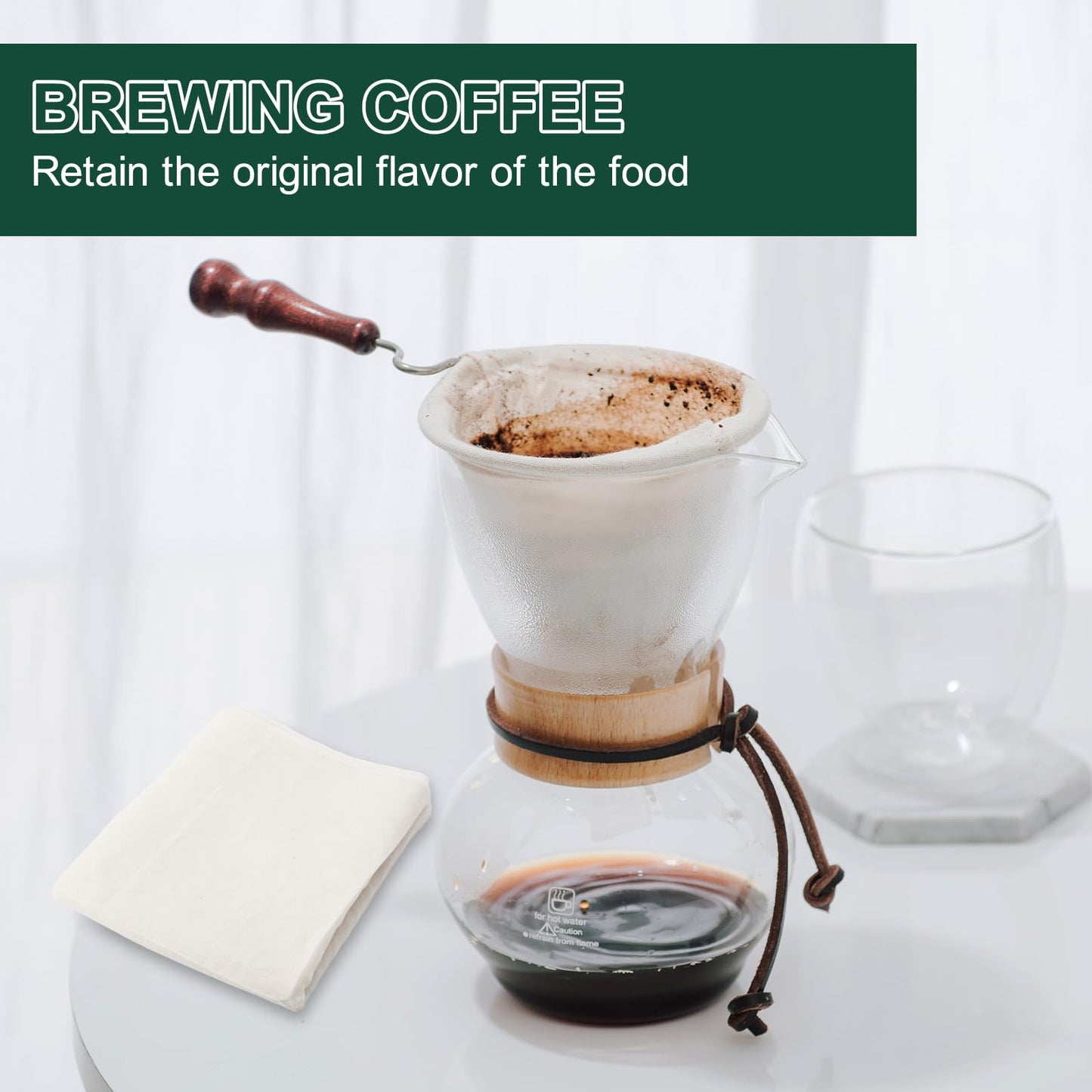
For all the stainless and glass in a non-toxic kitchen, some jobs still want a cloth, straining stock, making nut milk or yogurt, filtering cold brew, bundling herbs into a bouquet garni, basting a turkey.
The usual options are disposable paper filters or synthetic mesh bags, both of which put paper coatings or plastic between you and your food. Cheesecloth solves it with a simple natural fiber. This set is six 20-by-20-inch cloths of 100% organic, unbleached cotton, a grade-100 fine weave at 56 by 41 threads per inch, which is finer and more durable than the more common grade-90 or grade-50 cloths.
Two details make it a genuinely clean choice. It is unbleached, so it skips the chlorine bleaching that whiter cheesecloth goes through, and it is organic cotton, grown without the synthetic pesticides of conventional cotton. The edges are folded and stitched rather than raw, so loose threads do not end up in your food, and because it is real cloth, you rinse it, wash it, and reuse it many times instead of throwing away a filter after every use. For straining and filtering without plastic or paper, it is about as simple and honest as a tool gets.
True Shift Score: 8.4 / 10
This is our own assessment, not a lab result or a certification.
It scores well as a genuinely clean, simple tool: 100% organic, unbleached cotton in a fine grade-100 weave, with stitched edges so it does not shed threads, reusable many times over, and a plastic- and paper-free way to handle straining and filtering. It lands just below the most permanent tools on our scale only because it is a natural fiber that needs proper washing and drying, can shrink slightly, and will eventually wear out, the ordinary trade-offs of cloth rather than real shortcomings. For plastic-free straining, it is an easy recommendation.
The Honest Tradeoffs
1. Cotton is a natural material, so it behaves like one.
2. It can shrink a little the first time it meets hot water, which is normal, so wash it warm rather than hot.
3. You may spot tiny dark flecks in unbleached cotton, those are natural plant impurities, not dirt, and a quick soak before first use takes care of them.
4. It does need proper care to last: rinse it right after use, wash it without heavy detergent or fabric softener, and let it dry fully so it does not hold odors or mildew.
5. And like any cloth, it will eventually wear out after long service, though good grade-100 cotton lasts far longer than the flimsy stuff, and a six-pack means you are well stocked.
6. None of this is a flaw, it is simply the nature of a reusable natural fiber.
How We Evaluate Cooking Tools
We look at four things, and none of them is a lab score:
1. Whether the material is inert and won't shed or leach into your food
2. How it holds up to heat and daily use
3. The quality of the construction including the handle
4. And how long it is built to last
For cooking tools, the real shift is away from plastic that softens and sheds, toward materials that simply don't.

When Something Else Is the Better Fit
- For straining tea or spices specifically, a permanent stainless steel infuser is more convenient than a cloth you have to tie and wash.
- But for the wide range of straining, filtering, and bundling jobs, especially fine straining of stocks, nut milks, and yogurt, cheesecloth is the right tool, and this organic, unbleached version keeps it plastic- and bleach-free.
Browse the range in the Microplastic-Free Cooking Tools collection.
Related Reading and Collections
For why plastic utensils are worth replacing and how the materials compare, read our guide to non-toxic cooking tools, and for the wider picture on PFAS and microplastics across the kitchen, see our non-toxic kitchen guide. To weigh other options, browse the full Microplastic-Free Cooking Tools collection, or step back to the Microplastic-Free Kitchen hub for cookware, cutting boards, and food storage. If you would like to work through your whole home step by step, our DIY Healthy Home Guidebooks are a practical place to start.
Frequently Asked Questions
Why unbleached and organic?
Unbleached means the cotton skips the chlorine bleaching that whiter cheesecloth undergoes, and organic means it is grown without synthetic pesticides. Together they make for a natural cloth with nothing extra to transfer to your food, which is the whole point of choosing it over bleached or conventional versions.
Are the little dark specks a problem?
No. Small dark flecks in unbleached cotton are natural plant impurities, not dirt, and they are harmless. A quick soak in warm water before the first use cleans them up.
How do I wash and reuse organic unbleached cotton cheesecloth?
Rinse it immediately after use, wash it in warm water without heavy detergent or fabric softener, and let it dry fully before storing so it does not hold odors. For extra sterilization you can boil it. Cared for this way, the cloth reuses many times.
About This Product
This cheesecloth is fulfilled through Amazon, which handles pricing, availability, and shipping. The True Shift earns a commission on qualifying purchases, and that is what keeps this work independent and reader-supported rather than funded by the brands being reviewed.
MAKE THE TRUE SHIFT TODAY
Check current price and availability on AmazonTake the Shift Further
The True Shift Non-Toxic Home Swaps
-
WATER & AIR PROTECTION
Water & Air Protection for a Healthier Home The water you drink...
-
MICROPLASTIC-FREE KITCHEN
The Heart of a Non-Toxic Home The kitchen is where a lot...
-
CHEMICAL-FREE BATH & BODY
Your skin is your body's largest organ, and it absorbs everything you...
-
NON-TOXIC BABY & KIDS' ESSENTIALS
Protect your most vulnerable family members. Vetted, non-toxic alternatives for feeding gear,...
-
HEALTHY HOME OFFICE
Maximize health and focus while you work. Solutions for reducing VOCs from...
-
NON-TOXIC SLEEP & LAUNDRY
Did you know your bed is often the place where chemicals mess...
Microplastic Guides
-
The Plastic-Free Diet 2026: Your 30-Day Bluepri...
The complete 30-day guide to eliminate microplastics, PFAS & forever chemicals from your home. Science-backed steps, product swaps, and real results.
The Plastic-Free Diet 2026: Your 30-Day Bluepri...
The complete 30-day guide to eliminate microplastics, PFAS & forever chemicals from your home. Science-backed steps, product swaps, and real results.
-
How to Create a Healthy Home: A Practical Guide...
Tired of living in a space that doesn’t support you? Learn how to create a healthy, non-toxic home that reflects your core values & goals in just 5 simple steps.
How to Create a Healthy Home: A Practical Guide...
Tired of living in a space that doesn’t support you? Learn how to create a healthy, non-toxic home that reflects your core values & goals in just 5 simple steps.
-
Beyond Plastic: The Modern Approach to Home Org...
Ditch cheap plastic bins and containers for beautiful, non-toxic alternatives. Reduce microplastics, save money, and create a calmer, healthier home with these modern strategies.
Beyond Plastic: The Modern Approach to Home Org...
Ditch cheap plastic bins and containers for beautiful, non-toxic alternatives. Reduce microplastics, save money, and create a calmer, healthier home with these modern strategies.
Sign up for the latest from The True Shift
Receive updates on Healthy Home hacks, lifestyle tips, and other sustainability news.
