
Skip to product information
1 of 21

AquaTru Carafe Countertop Reverse Osmosis Purifier: Certified, with Glass Carafe and Mineral Boost

AquaTru Carafe Countertop Reverse Osmosis Purifier: Certified, with Glass Carafe and Mineral Boost

Why We Choose AquaTru Carafe

The AquaTru Carafe is the compact, glass version of certified countertop filtration, made for one or two people rather than a whole household. It does the same serious work as its larger sibling, four-stage reverse osmosis with real third-party certification, but it collects the purified water in a 64-ounce borosilicate glass carafe instead of a plastic tank, which is the detail that makes it the most on-brand water filter we carry. If you want thorough, certified filtration with no plumbing, in a footprint that suits a smaller kitchen and keeps your clean water in glass, this is the one.

How it filters

1. Reverse osmosis pushes water through a membrane fine enough to reject dissolved contaminants that carbon alone cannot capture, staged here with a pre-filter and carbon before the membrane and a final filter after it.

2. The Carafe runs a cycle and fills the glass carafe rather than pouring on demand, so it works a batch ahead of you.

3. It uses filters made specifically for the Carafe, not the ones from the larger Classic, which is worth knowing when you reorder.

4. A genuine advantage: this version is the alkaline model, so its final-stage filter adds calcium and magnesium back into the water after purification. That matters because reverse osmosis strips minerals along with contaminants and can leave the water tasting flat, and the mineral boost is what prevents that. It is the cleanest answer to the one real taste complaint people have about RO water.

What it actually reduces, and how it is verified

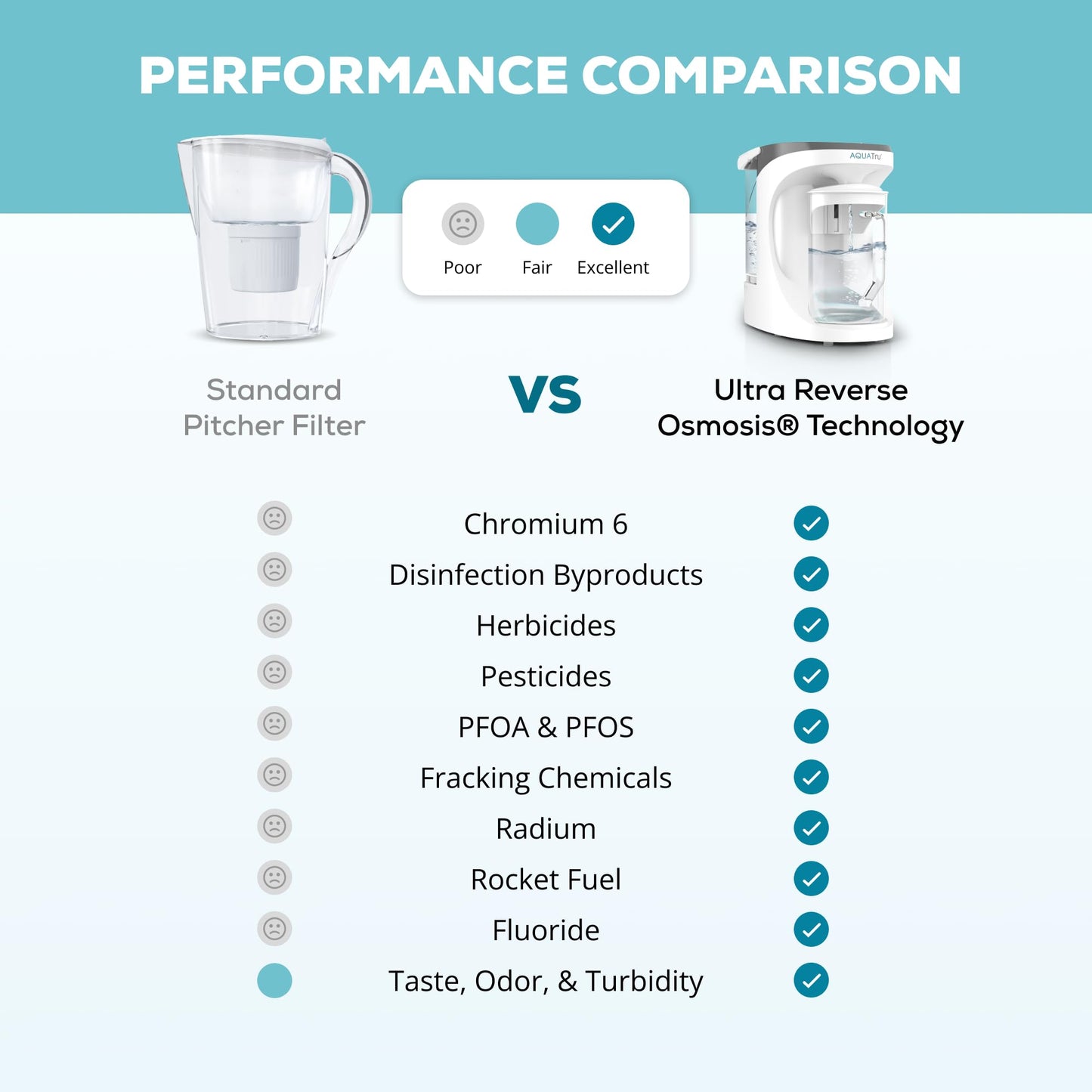
The Carafe is independently tested and certified by IAPMO to NSF/ANSI standards to reduce more than 80 contaminants, including the forever chemicals PFOA and PFOS, along with lead, fluoride, chlorine, and microplastics. IAPMO is an accredited third-party certifier in the same role as NSF, so this is verified performance rather than a self-funded claim, the standard we hold this whole category to. For context on why PFOA and PFOS reduction is worth prioritizing, the EPA has set enforceable limits for both in public drinking water and a health goal of zero: https://www.epa.gov/pfas

The glass carafe is more than a style choice. Reverse osmosis water is very pure, which also makes it more prone to picking up substances from whatever holds it, so storing it in borosilicate glass rather than plastic avoids reintroducing the kind of particles you just filtered out. That is the Carafe's real edge over plastic-tank systems.

The honest tradeoffs

1. Reverse osmosis sends some water to the drain as part of how the membrane works, so it is less water-efficient than a filter that passes everything through. 

2. The carafe holds 64 ounces per cycle, which is plenty for one or two people but means more frequent refilling for a busy family

3. It is an appliance, so it needs counter space and a power outlet

4. And while the carafe itself is glass, the body is BPA-free Tritan plastic, so it is not entirely plastic-free, and the glass carafe can break, which is the usual tradeoff for glass.

View full details

Our Take: The True Shift Score ( 7.8 / 10)

A quick note on the number below. This is our own assessment, not a lab result or a certification. It reflects how we weigh the things a non-toxic home actually depends on, which means materials, durability, and waste count for more in our scoring than convenience does.

Filtration for Purpose: 9 / 10

Certified reverse osmosis reducing more than 80 contaminants, including PFAS, lead, and fluoride, with genuine IAPMO certification, plus a mineral boost that restores taste after purification.

Non-Toxic Build: 7 / 10

The glass carafe keeps purified water out of plastic, which earns it a point over plastic-tank systems, though the body itself is BPA-free Tritan plastic.

Durability and Longevity: 7 / 10

Long-lived filters, with the membrane lasting up to two years, set against the pump and electronics of any powered unit and a glass carafe that can break.

Waste Reduction: 7 / 10

Long filter intervals reduce cartridge waste, but like all reverse osmosis it sends some water to the drain.

Ease of Use: 8 / 10

No plumbing, compact, and simple, with the only asks being counter space, an outlet, and refilling more often given the 64-ounce capacity.

Value Over Time: 7 / 10

A higher upfront cost than a pitcher, offset by long filter life and a far lower cost than bottled water, with the alkaline version priced a step above the base model.

Overall, our 7.8 reflects the most on-brand certified filter we carry, edging the Classic on glass storage and remineralized taste while trailing it on capacity. The two are close and simply suit different households.

When a different option is the better call

  • If you have a larger household or want a bigger push-button tank, the AquaTru Classic is the larger sibling, with more capacity in a plastic tank. The Carafe is the compact, glass-carafe choice for smaller needs.

  • If you want the lowest entry price and do not need reverse osmosis, the Clearly Filtered or ZeroWater pitchers cost far less, with narrower jobs and more frequent filter changes.

  • And if you are ready for permanent plumbing, an under-sink reverse osmosis system from our collection delivers filtered water from a dedicated faucet: APEC ROES-PH75 Alkaline Mineral System, Waterdrop G3P800 Tankless System, and APEC 600 GPD Tankless System.

  • The specific case for the Carafe is certified RO, no installation, glass storage, and remineralized taste, in a compact size.

  • And if your concern reaches beyond drinking water to the water you shower and bathe in, or to sediment and chlorine throughout the house, a whole-house system from our collection treats every tap at the point of entry, though for PFAS and lead at the kitchen tap you would still pair it with a point-of-use system like this one.

FREQUENTLY ASKED QUESTIONS

Does it remove PFAS?
Yes. It is independently certified by IAPMO to NSF standards to reduce PFOA and PFOS, along with lead, fluoride, and more. Treat it as certified, meaningful reduction rather than a guarantee of zero.

How is it different from the AquaTru Classic?
The Carafe is compact, holds 64 ounces in a glass carafe, and suits one or two people. The Classic is larger, uses a plastic tank, and suits families. Both carry the same certification, and they use different filters.

Will reverse osmosis make the water taste flat?
Not with this model. The alkaline version adds minerals back after purification, which is what restores the taste that plain RO can strip.

Does it need plumbing?
No. It sits on the counter, plugs in, and you fill it by hand.

Is it plastic?
The carafe is borosilicate glass, which is the point. The body is BPA-free Tritan plastic, so it is not entirely plastic-free, but your purified water is stored in glass.

How we evaluate products

Rather than a single number, here is the basis for the recommendation. We weighted certified contaminant reduction heavily, credited the glass carafe as a real advantage for storing pure RO water, noted the remineralization that fixes RO's flat taste, stated the reverse osmosis tradeoffs of drain water and capacity plainly, and set the unit against named alternatives including its larger sibling so the choice is contextual.

Looking for non-toxic product swaps? Read our guides on Water and Air Protection and the microplastics effect on human health

Best Water Filter for Microplastics & PFAS in 2026
Beginner’s Guide to Toxin-Free Water
How to Choose a Non-Toxic Air Purifier