
Skip to product information
1 of 9

Clearly Filtered Water Pitcher: Broad-Spectrum Filter for PFAS, Fluoride, and Lead

Clearly Filtered Water Pitcher: Broad-Spectrum Filter for PFAS, Fluoride, and Lead

Why We Choose Clearly Filtered Pitcher

The Clearly Filtered pitcher is the one to look at when you want the broadest contaminant reduction you can get from something that sits on the counter and needs no plumbing. Where most pitchers focus on chlorine and taste, this one is built and independently tested to reduce a long list of contaminants, including PFAS, fluoride, lead, and microplastics. It is made in the USA, and it is the thorough, no-installation option for someone who wants more than a basic filter but is not ready for an under-sink or reverse osmosis system. It is also slower and more expensive than an ordinary pitcher, and we will be honest about that, because it is the tradeoff you are making for the breadth.

How it filters

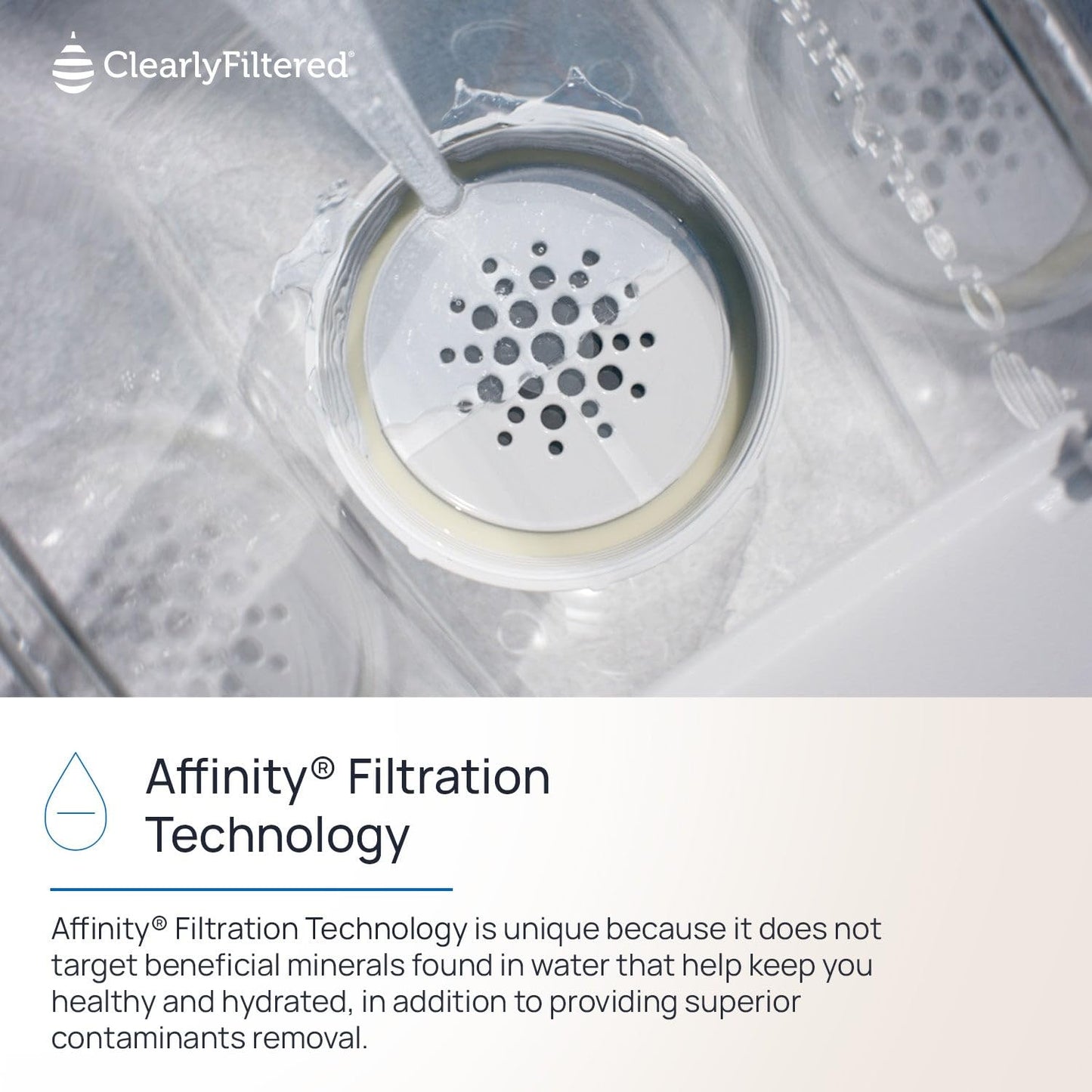
Clearly Filtered uses a multi-stage media its maker calls Affinity filtration, a denser and more layered cartridge than the simple carbon disc in a typical pitcher. That density is what lets it target a wider range of contaminants, and it is also why the water flows through more slowly than you may be used to. The current pitcher is the updated model, and it holds about ten cups.

What it actually reduces, and how it is verified

This is the part worth reading closely, because certification language gets misused constantly in this category. Clearly Filtered states that its filter is independently tested by accredited laboratories to NSF/ANSI Standards 42, 53, 244, 401, and 473, the last of which is the protocol for PFOA and PFOS, the two most-studied forever chemicals. Across those tests it targets more than 365 contaminants, including fluoride, chlorine, lead, arsenic, and microplastics.

The honest nuance: it is tested to those NSF/ANSI standards by third-party labs, but it is not itself NSF-certified, which is a separate, ongoing certification program. Tested-to and certified-by are not the same thing, and a brand that says one while implying the other is the kind of thing we flag rather than repeat. Clearly Filtered's third-party testing is real and credible, and you should understand it as exactly that rather than as an NSF certification mark. For context, the EPA has set enforceable limits for PFOA and PFOS in public drinking water and a health goal of zero, so reducing them is a reasonable priority: https://www.epa.gov/pfas

The honest tradeoffs

1. It is expensive for a pitcher, both the pitcher itself and the replacement filters, which cost more than most and last around four months.

2. The flow is slow, a direct result of the dense media doing more work, so filling a glass takes patience and refilling the reservoir is a regular task.

3. And the pitcher body is BPA and BPS-free plastic rather than glass or steel, so while it avoids those specific plasticizers, it is not a no-plastic product, and we would rather say that plainly than imply otherwise.

View full details

Our Take: The True Shift Score ( 7.0 / 10)

A quick note on the number below. This is our own assessment, not a lab result or a certification. It reflects how we weigh the things a non-toxic home actually depends on, which means materials, durability, and waste count for more in our scoring than convenience does.

Filtration for Purpose: 9 / 10

The broadest reduction you can get from a pitcher, tested to the relevant NSF/ANSI protocols including the PFOA and PFOS standard. Held just back because it is tested-to rather than NSF-certified, and it is still a pitcher rather than a whole-system solution.

Non-Toxic Build: 7 / 10

BPA and BPS-free plastic, made in the USA. Good, but not the glass or steel that would earn full marks for a buyer avoiding plastic entirely.

Durability and Longevity: 6 / 10

A plastic pitcher with filters that last around four months. Reasonable, not exceptional.

Waste Reduction: 6 / 10

A four-month filter life is better than the frequent changes a zero-TDS pitcher needs, but the cartridges are still regular plastic waste.

Ease of Use: 7 / 10

No installation and a simple pour, offset by slow flow and a reservoir you refill often.

Value Over Time: 6 / 10

A high upfront cost plus premium filters, justified only if you genuinely want this much contaminant breadth from a pitcher.

Overall, our 7.0 reflects a genuinely thorough pitcher whose breadth is its reason to exist, weighed against a plastic body, slow flow, and a real ongoing cost.

When a different option is the better call

  • If your main goal is the lowest possible total dissolved solids and a budget price, the ZeroWater 7-Cup reduces water to zero TDS for far less upfront, though with shorter filter life and a higher running cost.

  • If you want thorough, permanent filtration without refilling a pitcher, a from our collection installs under the sink or sits on the counter and handles a larger contaminant load with less daily effort.

➜AquaTru Classic Countertop Purifier (countertop, no plumbing, certified)

➜ AquaTru Carafe Countertop Purifier (countertop, no plumbing, glass carafe)
➜ Bluevua RO100ROPOT-LITE Countertop System

➜ Waterdrop K19-S Countertop System

➜ APEC ROES-PH75 Alkaline Mineral System (under-sink)

➜ Waterdrop G3P800 Tankless System (under-sink)

➜ APEC 600 GPD Tankless System (under-sink)

  • The case for the Clearly Filtered is specifically broad contaminant reduction with zero installation, and if that is what you want, it is among the strongest pitchers for the job.

FREQUENTLY ASKED QUESTIONS

Does it remove PFAS?
It is independently tested to reduce PFOA and PFOS to the NSF/ANSI 473 protocol, which is the relevant standard for those forever chemicals. Understand it as third-party tested to that standard rather than NSF-certified, and as meaningful reduction rather than guaranteed total removal.

Is it NSF certified?
No. Clearly Filtered tests its filter to NSF/ANSI standards through accredited independent laboratories, but it does not carry NSF certification, which is a separate program. The testing is real, and we describe it as testing rather than certification on purpose.

Why is the water slow?
The dense, multi-stage media that lets it reduce so many contaminants is also what slows the flow. That tradeoff is inherent to how thorough pitcher filters work.

Is the pitcher plastic?
Yes, BPA and BPS-free plastic, made in the USA. It avoids those plasticizers but is not a glass or steel product.

How often do filters need changing, and what do they cost?
About every four months under normal use, and the replacement filters cost more than most pitcher filters, so factor that ongoing expense in.

How we evaluate products

Rather than a single number, here is the basis for the recommendation. We weighted contaminant reduction and its verification heavily, drew the honest line between tested-to and certified-by, noted the BPA-free plastic build and the premium ongoing filter cost, and set the pitcher against named alternatives so the choice is contextual rather than absolute.


Looking for non-toxic product swaps? Read our guides on Water and Air Protection and the microplastics effect on human health

Best Water Filter for Microplastics & PFAS in 2026
Water Filtration Made Simple