
Skip to product information
1 of 3

Emile Henry Salt Pig in Charcoal Black (Made in France)

Emile Henry Salt Pig in Charcoal Black (Made in France)

A French Ceramic Classic for Salt at the Stove

If you cook with your fingers, reaching for a pinch of salt as you go, a salt pig earns its spot on the counter fast.

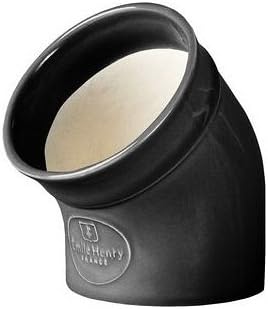
This one is from Emile Henry, who has been making ceramic in Burgundy, France since 1850, and it is a small piece that quietly does its job well. The hooded shape keeps dust and cooking splatter off your salt while leaving a wide opening you can dip a whole hand into, and the heavy ceramic body sits stable by the stove. The charcoal black glaze is deep and handsome, the kind of understated piece that looks like it has always belonged in the kitchen.

For a microplastic-free, low-tox kitchen, two things make it stand out.

First, it is solid ceramic, no plastic anywhere, made from high-fired Burgundy clay using Emile Henry's HR ceramic. Second, and unusually well documented for this category, the glazes are stated to be free of lead, cadmium, and nickel and to meet California Prop 65, which is a stronger, clearer safety claim than most ceramic gets. The interior is intentionally left unglazed so salt does not stick or clump against it, which means your salt rests against bare high-fired clay rather than glaze, exactly what you want for dry salt.

True Shift Score: 8.5 / 10

This is our own assessment, not a lab result or a certification.

It scores high for material and provenance: solid high-fired French ceramic with no plastic, and a glaze that is documented as lead-, cadmium-, and nickel-free and Prop 65 compliant, which is clearer safety information than most ceramic offers, from a maker with a 170-year track record and a ten-year guarantee. It sits just shy of the top only because it is a single-purpose, open salt cellar rather than a sealed, all-purpose storage container. For a plastic-free, low-tox salt keeper, it is an excellent choice.

The Honest Tradeoffs

A couple of honest points so it meets the right expectation.

1. This is a salt pig, an open, hooded cellar for easy access while you cook, not an airtight sealed container, so it is built for salt and dry seasonings you reach into often rather than for long-term airtight storage. 

2. The unglazed interior is the right choice for salt specifically, since salt stays dry, but it is not meant for moist or oily contents that could soak into bare clay. 

3. And while the ceramic is famously durable and backed by a ten-year guarantee, it is still ceramic, so a hard drop onto a tile floor can chip it. 

4. None of this is a drawback, it is simply what a salt pig is for.

How We Evaluate Food Storage

We look at four things, and none is a lab score:

1. Whether the food-contact surface is inert and safe

2. Which for ceramic comes down to the glaze and whether it is free of lead and cadmium

3. Whether the clay body is high-fired and durable or a more porous earthenware

4. What the lid or seal is actually made of and how it holds up over years of use

The real shift in food storage is getting your food off plastic and onto inert materials like glass, steel, and well-made lead-free ceramic.

View full details

When Something Else Is the Better Fit

  • For dry goods you want sealed against air and moisture, an airtight canister is the better tool, the Henry Watson coffee canister seals with a wood-and-rubber lid.
  • For salt or spices you want fully enclosed, an all-metal tin like the AUNMAS stainless canister closes over the top.
  • This Emile Henry salt pig is the pick when you want a beautiful, well-documented, plastic-free ceramic keeper for salt at the stove.

Browse more in the Microplastic-Free Food Storage collection.

Related Reading and Collections

For keeping fruits and vegetables fresh without plastic, see our produce storage guide, and for the wider picture on PFAS and microplastics across the kitchen, read our non-toxic kitchen guide. To weigh other options, browse the Microplastic-Free Food Storage collection, or step back to the Microplastic-Free Kitchen hub for cookware, cutting boards, and cooking tools. If you would like to work through your whole home step by step, our DIY Healthy Home Guidebooks are a practical place to start.

Common Questions About the Emile Henry Salt Pig

Is the Emile Henry salt pig lead-free and food-safe?

Yes. Emile Henry states its glazes are free of lead, cadmium, and nickel and meet California Prop 65, and the body is high-fired Burgundy ceramic, which together make it a well-documented, food-safe choice. That level of glaze documentation is stronger than most ceramic provides.

Why is the inside of the salt pig unglazed?

The interior is left unglazed on purpose so that salt does not stick or form a crust against a slick glazed surface. Salt stays dry, so resting it against bare high-fired clay is ideal. This also means the pig is meant for dry salt and seasonings rather than moist or oily contents.

Is the salt pig airtight?

No. It is an open, hooded salt cellar designed for quick access while cooking, with the hood keeping out dust and splatter. For dry goods you need sealed against air and moisture, an airtight canister is the better choice.

About This Product

This item is fulfilled through Amazon, which handles pricing, availability, and shipping. It can occasionally sell out on Amazon, so if the link shows it as unavailable, it is worth checking back, since stock tends to return. The True Shift earns a commission on qualifying purchases, and that is what keeps this work independent and reader-supported rather than funded by the brands being reviewed.