
Skip to product information
1 of 32

Teakhaus End-Grain Teak Butcher Block

Teakhaus End-Grain Teak Butcher Block

A Teak End-Grain Block Built to Shrug Off Water

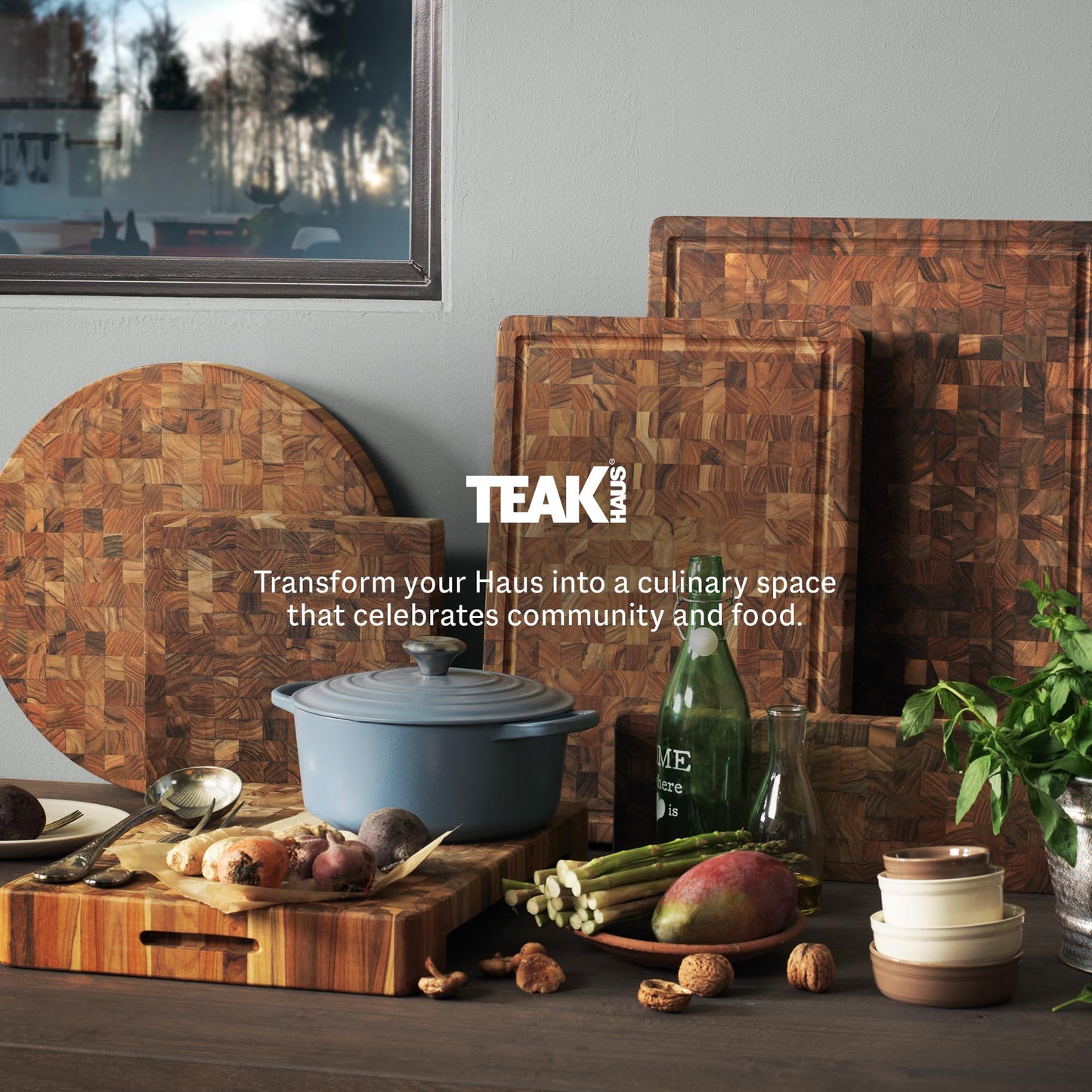
Teakhaus, made by Proteak, builds its boards from plantation teak, and this is their end-grain butcher block: a thick, reversible teak block assembled from many strips so the fiber ends face up. End grain is the construction that lets a knife slip between the wood fibers rather than scoring across them, which keeps edges sharper and lets the surface close back up after each cut instead of holding permanent grooves. As solid wood, it sheds no microplastics into your food, which is the reason to be rid of plastic in the first place.

What sets teak apart from the walnut and maple boards is the wood itself. Teak carries a high level of natural oils, which makes it unusually water-resistant and dimensionally stable, so it resists the warping and cracking that other woods are prone to and needs a little less babying over its life. The board arrives pre-oiled and ready to use, with no plastic parts, coatings, or synthetic finishes, just teak.

The teak is 100% FSC-certified, which is a real third-party forestry certification, and Teakhaus is genuinely serious about it, with two decades of plantation sourcing behind the brand. Worth being precise: FSC certifies responsible sourcing, not a food-safety lab result, so read it as a strong sustainability credential rather than a health seal.

True Shift Score: 8.9 / 10

This is our own assessment, not a lab result or a certification.

Teak end grain checks the core boxes: no microplastic shedding, a self-healing knife-friendly surface, and exceptional durability, with teak's natural water resistance making it the most weather-tolerant and arguably the lowest-maintenance wood board here. The FSC sourcing is a genuine plus. It lands just below the walnut end-grain boards for one honest reason: teak's silica makes it marginally harder on knife edges than the softer hardwoods, so for pure edge care, walnut wins by a hair. For durability and water resistance, teak is the standout.

The Honest Tradeoffs

Here is the honest catch with teak that most listings skip:

1. Teak contains natural silica, the same mineral that makes it weatherproof, and silica is mildly abrasive. That means a teak board will dull your knives a little faster than a softer hardwood like walnut or cherry will. 

2. It is still far gentler than any plastic, glass, or steel board, and for most cooks the difference is small, but if you are protecting expensive Japanese steel, a walnut end-grain board is the kinder surface. 

3. Beyond that, this is a heavy block, it is an end-grain board glued from many strips so it relies on a food-safe adhesive bond, and it carries the usual wood-board upkeep: hand wash only, dry promptly, and oil it a couple of times a month. 

4. Teak's natural oils make that maintenance lighter than most, but it is not zero.

How We Evaluate Cutting Boards

We look at four things, and none of them is a lab score:

  • Whether the material sheds microplastics
  • How kind it is to your knives
  • Whether any glue or finish is food-safe
  • And how well it lasts with normal care

Cutting boards are a microplastics-and-glue question, not a PFAS one, despite what some guides imply.

View full details

When Something Else Is the Better Fit

  • If your priority is the gentlest possible surface for fine knives, a walnut end-grain board like the WoodForChef or Virginia Boys edges out teak on knife-friendliness.
  • If you want a lighter, lower-cost everyday board, the edge-grain John Boos maple R-Board is the value pick.
  • For raw meat and hard scrubbing, a stainless steel board is the most hygienic, accepting that metal dulls knives.

Related Reading and Collections

For the full science on why plastic boards shed and how the materials compare, read our guide to microplastics in cutting boards, and for the wider picture on PFAS and microplastics across the kitchen, see our non-toxic kitchen guide. To weigh other options, browse the full Sustainable Cutting Boards collection, or step back to the Microplastic-Free Kitchen hub for cookware, cooking tools, and food storage. If you would like to work through your whole home step by step, our DIY Healthy Home Guidebooks are a practical place to start.

Frequently Asked Questions

Is teak a good material for a cutting board?

Yes. Teak's natural oils make it highly water-resistant and stable, so it resists warping and cracking and needs less maintenance than most woods. The one tradeoff is that teak's natural silica content makes it slightly more abrasive on knives than walnut or cherry, though still far gentler than plastic, glass, or steel.

Is the teak sustainably sourced?

Teakhaus uses 100% FSC-certified plantation teak and has built the brand around responsible forestry. FSC is a credible third-party sustainability certification covering where and how the wood is grown and harvested.

How do I care for it?

Hand wash with mild soap, never the dishwasher, and dry it promptly. Apply food-grade mineral oil two to three times a month. Teak's natural oils mean the upkeep is lighter than for other woods, but it still benefits from regular oiling to stay its best.

About This Product

This board is fulfilled through Amazon, which handles pricing, availability, and shipping. The True Shift earns a commission on qualifying purchases, and that is what keeps this work independent and reader-supported rather than funded by the brands being reviewed.