
Skip to product information
1 of 1

NSF-Certified Natural Rubber Cutting Board, Knife-Friendly, USA – NoTrax Sani-Tuff

NSF-Certified Natural Rubber Cutting Board, Knife-Friendly, USA – NoTrax Sani-Tuff

The Professional Kitchen's Quiet Favorite

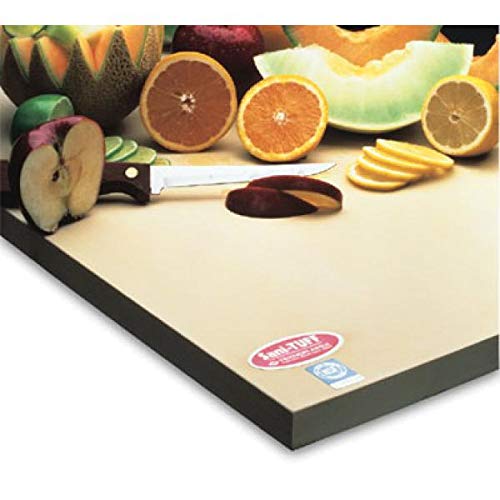
The NoTrax Sani-Tuff is the board a lot of restaurant kitchens reach for, and once you understand what it is, the appeal is obvious. It is made from natural rubber, not plastic, so it does not shed microplastics the way a polyethylene board does, and it is built at a hardness that is engineered specifically to be kind to knife edges. The surface gives just enough to cushion the blade and then closes back over the cut, so it self-heals much like a good wood board does, without the bounce-back you get on stiffer surfaces. It is made in the USA and tested and certified by NSF International, which is a genuine third-party food-safety certification.

Where rubber pulls ahead of wood is hygiene and toughness. It is completely nonporous, so it will not absorb liquids or odors, and Sani-Tuff uses an anti-microbial rubber compound that inhibits bacteria and fungus. It will not crack, splinter, swell, or warp the way wood and bamboo eventually can, and when the surface finally shows its years, you can sand it smooth again and effectively start over, which is why these boards last so long in commercial use. The rubber is also naturally non-slip, so it stays put while you work without a towel underneath.

True Shift Score: 8.3 / 10

This is our own assessment, not a lab result, though it is worth noting this board also carries a real NSF food-safety certification.

It scores near the top because it gets the fundamentals right in a way few boards do: 

It sheds no microplastics, its engineered hardness is genuinely gentle on knives

Tt is nonporous and anti-microbial so it is arguably more hygienic than wood

And it is effectively renewable through sanding, so it can outlast almost anything

It lands just below the best solid hardwood boards mainly on character rather than performance, the grippy surface rules out rock-chopping and serrated blades

It is heavy, and the latex base is worth flagging for sensitive users

The Honest Tradeoffs

This is a high-performing board, but it has a particular character you should know before buying.

1. The grippy rubber surface that keeps food from sliding also means it does not suit a rock-chop motion, where you pivot the knife across the board, and serrated blades are not recommended on it. 

2. It is a heavy, dense board, which is good for stability but not for tossing in and out of a drawer. 

3. It must be hand washed, since a dishwasher's heat can warp it, and although it resists most staining, deeply pigmented foods can leave a mark over time. 

4. One more honest note: it is natural rubber, so anyone with a latex sensitivity should take that into account.

How We Evaluate Cutting Boards

We look at four things, and none of them is a lab score:

1. Whether the material sheds microplastics

2. How kind it is to your knives

3. Whether any glue or finish is food-safe

4. And how well it lasts with normal care

Cutting boards are a microplastics-and-glue question, not a PFAS one, despite what some guides imply.

View full details

When Something Else Is the Better Fit

  • If you do a lot of rock-chopping or use serrated knives, a wood board like the WoodForChef walnut or a cherry board suits that style better.
  • If you want a lighter board that is easy to move and store, bamboo like the Greener Chef XL is more nimble.
  • But for hygiene, durability, and a knife-friendly surface that lasts for years, the Sani-Tuff is hard to beat.

Related Reading and Collections

For the full science on why plastic boards shed and how the materials compare, read our guide to microplastics in cutting boards, and for the wider picture on PFAS and microplastics across the kitchen, see our non-toxic kitchen guide. To weigh other options, browse the full Sustainable Cutting Boards collection, or step back to the Microplastic-Free Kitchen hub for cookware, cooking tools, and food storage. If you would like to work through your whole home step by step, our DIY Healthy Home Guidebooks are a practical place to start.

Frequently Asked Questions

Does a rubber board dull knives?

No, the opposite. Sani-Tuff rubber is made at a hardness chosen specifically to be easy on knife edges, and the surface self-heals after cuts. It is one of the more knife-friendly surfaces you can buy, comparable to good wood.

Is natural rubber safe for food?

Yes. It is nonporous, non-toxic, NSF certified, and uses an anti-microbial compound that inhibits bacteria and fungus. The main caveat is for people with a latex sensitivity, since it is a natural rubber product.

How do I care for it?

Hand wash with dish soap, never the dishwasher, since heat can warp it. No special oils are needed. If the surface gets heavily marked over years of use, you can sand it smooth to renew it.

About This Product

This board is fulfilled through Amazon, which handles pricing, availability, and shipping. The True Shift earns a commission on qualifying purchases, and that is what keeps this work independent and reader-supported rather than funded by the brands being reviewed.