
Skip to product information
1 of 17

Vermont Single Live-Edge Cherry Cutting Board

Vermont Single Live-Edge Cherry Cutting Board

A Glue-Free Cherry Slab With One Natural Edge

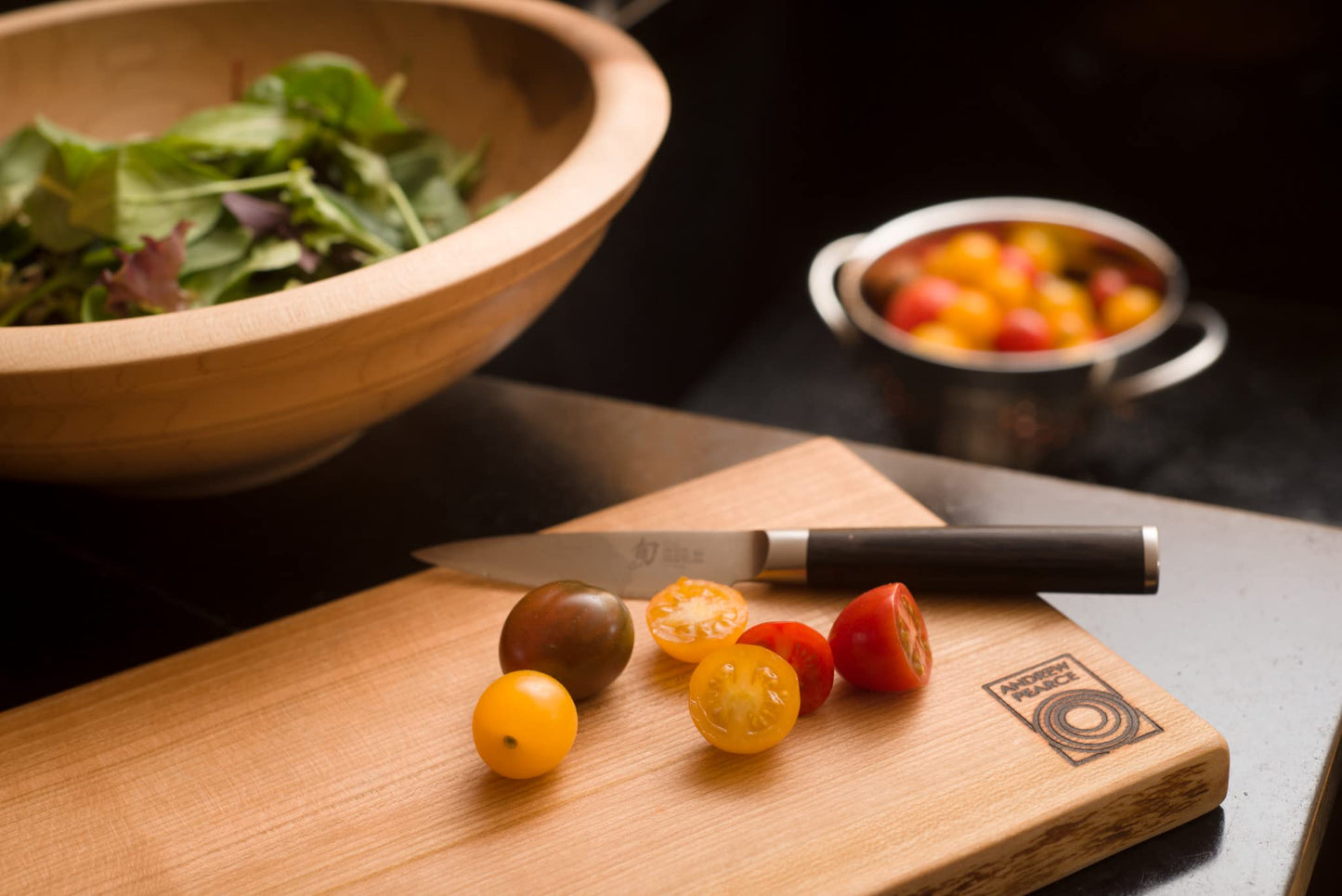
This is about as pure as a cutting board gets: a single live-edge board cut from one solid piece of cherry, handcrafted in Vermont by Andrew Pearce from local, sustainably sourced wood, with no glue anywhere in it. "Single live edge" means one side keeps the natural contour of the tree, which makes each board genuinely one of a kind and beautiful enough to carry straight from the kitchen to the table as a serving or charcuterie board. Because it is one solid slab rather than strips bonded together, there is no adhesive to think about at all, which sidesteps the glue question entirely. As solid cherry, it sheds no microplastics.

Cherry is a quietly ideal cutting wood. It is a softer hardwood, so it is gentle on knife edges, and its close grain gives it good natural resistance to bacteria and moisture. Andrew Pearce finishes each board with a food-safe, allergen-free walnut wood oil rather than any synthetic coating, so what touches your food is wood and a food-safe oil and nothing else. It is a handsome, mid-sized board, well suited to everyday prep for one or two people and to serving.

True Shift Score: 8.8 / 10

This is our own assessment, not a lab result or a certification.

It earns a high mark for being genuinely glue-free, which removes the adhesive question that every laminated board has to answer, and for being knife-friendly cherry, sustainably and locally sourced, and finished with nothing but a food-safe oil. It sits just under the thick end-grain blocks because a single live-edge slab is narrower and a little more demanding to keep flat, which is the nature of one-piece wood rather than a flaw in this board.

The Honest Tradeoffs

1. A single live-edge slab is the most natural option, but that comes with honest tradeoffs. It is narrower than a rectangular block, so it is better for everyday prep and presentation than for breaking down a large volume of ingredients at once. 

2. And like any solid single-piece board, it needs care to stay flat: wash it, dry it promptly, and let it air dry standing on its side so air reaches both faces, because drying unevenly is what causes a single slab to cup. 

3. Recondition it with a food-safe oil periodically. None of this is difficult, but a glued, thicker block is more forgiving if you want something you can be careless with.

How We Evaluate Cutting Boards

We look at four things, and none of them is a lab score:

1. Whether the material sheds microplastics

2. How kind it is to your knives

3. Whether any glue or finish is food-safe

4. And how well it lasts with normal care

Cutting boards are a microplastics-and-glue question, not a PFAS one, despite what some guides imply.

View full details

When Something Else Is the Better Fit

If you need a large, flat workhorse for heavy daily prep, a thick rectangular block like the John Boos walnut butcher block or an end-grain WoodForChef walnut gives you more room and more stability. For a scrub-hard surface for raw meat, a stainless steel board is the most hygienic. This board is the one to choose when you want natural beauty and a glue-free piece for everyday prep and serving.

Related Reading and Collections

For the full science on why plastic boards shed and how the materials compare, read our guide to microplastics in cutting boards, and for the wider picture on PFAS and microplastics across the kitchen, see our non-toxic kitchen guide. To weigh other options, browse the full Sustainable Cutting Boards collection, or step back to the Microplastic-Free Kitchen hub for cookware, cooking tools, and food storage. If you would like to work through your whole home step by step, our DIY Healthy Home Guidebooks are a practical place to start.

Frequently Asked Questions

What does "live edge" mean?

It means one edge of the board keeps the natural, irregular contour of the outside of the tree rather than being cut straight. It makes each board unique and gives it a rustic look that doubles nicely as a serving board.

Is a glue-free board better?

It removes the adhesive question entirely, since there are no bonded seams, which some people prefer. The tradeoff is that single-piece boards can cup if dried unevenly, so they need a little more care to keep flat than a laminated block.

How do I keep it from warping?

Wash it, dry it promptly, and stand it on its side to air dry so both faces dry evenly. Store it upright rather than flat on a damp counter, and recondition it with a food-safe oil periodically. Even drying is the key with any single-slab board.

About This Product

This board is fulfilled through Amazon, which handles pricing, availability, and shipping. The True Shift earns a commission on qualifying purchases, and that is what keeps this work independent and reader-supported rather than funded by the brands being reviewed.